Linking Verification Benchmarks to Expanded Game Options and Graduated Loyalty Structures Within Portable Casino Platforms

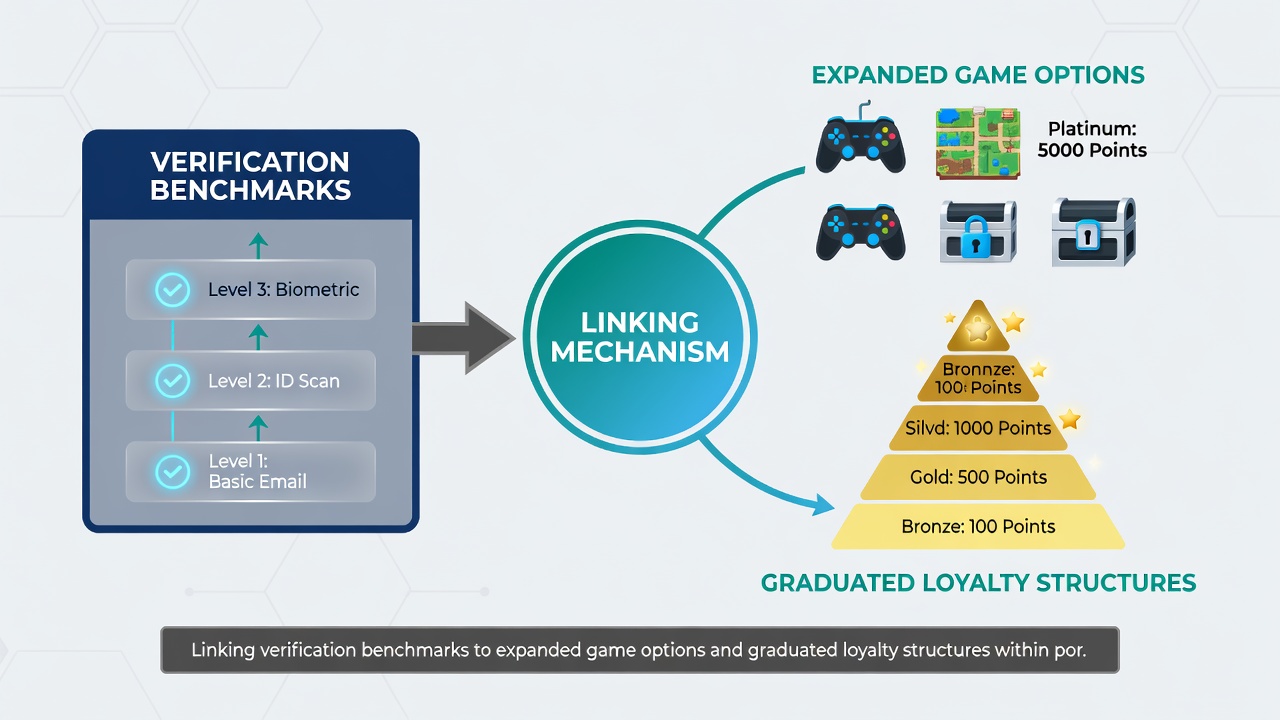
Verification benchmarks serve as foundational requirements that determine which game selections and loyalty frameworks portable casino platforms can implement, and operators must meet specific security, audit, and compliance criteria before accessing broader catalogs or implementing multi-level reward systems. Regulatory frameworks across multiple jurisdictions establish these benchmarks through documented processes that evaluate encryption standards, random number generator integrity, and transaction monitoring protocols, while platforms achieving higher certification levels gain authorization to integrate additional reel-based titles, live dealer formats, and hybrid mechanics.
Core Components of Verification Benchmarks in Mobile Environments
Independent testing laboratories assess portable platforms against measurable criteria that include data protection measures, payout verification systems, and user identity protocols, and these evaluations produce tiered certifications that directly influence operational scope. Data from regulatory submissions indicate that platforms passing advanced audits receive clearances to host expanded game libraries featuring higher volatility slots alongside real-time dealer interactions, whereas those with baseline approvals remain limited to core offerings. In July 2026, several regional authorities released updated compliance matrices that clarified how benchmark scores correlate with game variety permissions, allowing operators to map certification progress to specific content additions without separate approvals for each title.
Expansion of Game Options Through Certified Standards
Platforms that satisfy rigorous verification processes unlock access to wider selections of games because regulators link approval levels to demonstrated capacity for secure delivery and fair outcome generation. Studies conducted by research institutions show that certified mobile systems can incorporate progressive jackpot networks, multi-player table games, and branded content libraries that uncertified applications cannot host, and this linkage stems from documented requirements for continuous monitoring and reporting. Observers note that each incremental improvement in benchmark scores opens specific categories such as virtual sports integrations or skill-based bonus rounds, creating a structured pathway where compliance directly translates into content diversity rather than arbitrary expansion.
Graduated Loyalty Structures Enabled by Compliance Achievements
Verification benchmarks also shape loyalty program architecture because regulators require transparent tracking systems and verifiable reward calculations before authorizing tiered membership models. Platforms meeting elevated standards can deploy points-based systems that escalate through multiple levels, granting users access to exclusive tournaments, personalized bonuses, and accelerated withdrawal options that lower-tier programs cannot offer. Figures from industry reports reveal that graduated structures rely on verified user data streams and audited reward distribution mechanisms, ensuring that status advancements remain tied to documented play patterns rather than promotional claims alone.
Those who have examined regulatory filings observe that loyalty escalations often require separate benchmark validations beyond initial platform certification, particularly when programs involve cross-device synchronization or cryptocurrency-based redemptions. This creates sequential hurdles where operators first secure game expansion approvals and later demonstrate capacity for reward system integrity, resulting in staggered rollouts that align with audit cycles.
Intersections Across Regulatory Regions and Platform Types
Regional variations in benchmark application produce different outcomes for game availability and loyalty depth, with some authorities emphasizing transaction audit frequency while others prioritize game outcome certification. According to analyses from the New Jersey Division of Gaming Enforcement, platforms operating under stricter verification regimes maintain larger game portfolios and more complex loyalty ladders because ongoing compliance reporting supports real-time adjustments to user incentives. In contrast, jurisdictions with streamlined processes still require baseline benchmarks before permitting loyalty tier expansions, though the pathways differ in documentation volume and review timelines.
Research from academic sources such as the Australian Institute of Criminology indicates that portable platforms linking verification scores to both game counts and loyalty stages achieve higher user retention metrics across tested cohorts. These patterns emerge because users encounter progressive access to content and rewards only after platforms demonstrate sustained adherence, creating feedback loops where compliance investments yield measurable operational growth.
Practical Implementation Patterns in July 2026
During July 2026, several portable casino operators completed benchmark reassessments that coincided with scheduled game library updates and loyalty program revisions, demonstrating how these elements interconnect in practice. Compliance teams coordinated with testing laboratories to validate new encryption modules, after which regulators authorized additional live dealer streams and introduced a new loyalty tier that unlocked exclusive event access. Data streams collected during these transitions show that platforms maintaining continuous benchmark alignment experienced fewer interruptions when rolling out expanded options compared to those addressing certification gaps reactively.
Conclusion
Verification benchmarks function as gatekeepers that determine the scale of game options and the complexity of loyalty structures available on portable casino platforms, with each certification level unlocking specific capabilities through documented regulatory processes. Platforms that align their compliance efforts with these benchmarks can systematically expand content libraries and implement graduated reward systems, while those falling short remain constrained to narrower offerings. The connections between these elements continue to evolve as regulatory bodies refine their matrices and operators adapt their systems to meet updated standards across different regions.